

Why Doing More Is No Longer Working
And What Is: The Formula For Fulfillment

We’ve been told a story: that success—authentic, fulfilling, legacy-worthy success—comes from doing more. More hustle. More goals. More boards. More self-care. More impact. More everything.
But for many high-achieving leaders, that story is starting to fall apart.
In quiet moments—on the plane, before the Zoom room opens, late at night—there’s often a quiet pulse: Is this it? Despite the accomplishments, there’s a feeling of incompleteness. A missing 1%.
And here’s what I’ve come to believe, after decades of working with purpose-driven leaders, building the Lead in 3D framework, and testing it in boardrooms and barns: Doing more—especially in one area—inevitably leads to diminishing returns.
But there’s a powerful alternative. And it’s the key to unlocking the formula for fulfillment.
The Diminishing Returns Trap
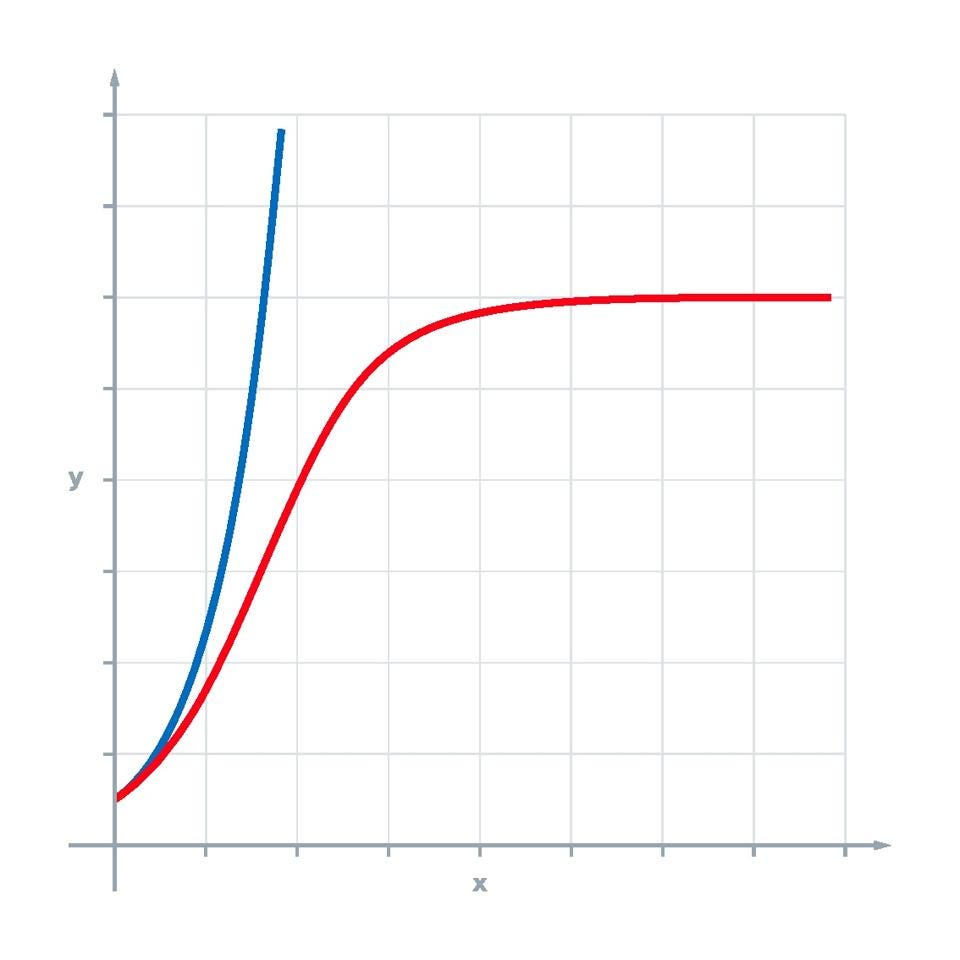
Economists have long used farming to illustrate the concept of diminishing returns. Imagine a farmer with a fixed plot of land, a set amount of seed, and a labor force. Adding more land won’t help if there aren’t enough workers or seed to use it. Doubling the seed won’t produce double the harvest if the land and labor stay the same. Eventually, pushing on just one lever flattens out—and the marginal benefit shrinks.
This isn’t just economics—it’s how many of us live and lead.
We go all in on one dimension:
We pour everything into our work (WE), chasing performance.
Or we pivot hard into self-care (ME), trying to recover.
Or we give everything to a cause (WORLD), striving for impact.
Each of these is admirable. But when pursued alone, they eventually stall. They top out. And they often leave us burned out, disconnected, or quietly unsatisfied.
This is the diminishing returns trap. It’s linear, fragile, and finite.
But when it comes to our own growth—our fulfillment, our impact, our joy—we’re still thinking in straight lines. We over-invest in one area and hope it will carry us all the way.
It won’t.
You might have seen this more directly in your business: You hire a new salesperson—but don’t increase your lead volume. No surprise, they don’t drive revenue. More effort in one lane can’t create exponential returns on its own.
Many high performers structure their lives like a monocrop—intensive, high-yielding, but vulnerable to disruption. A 3D-aligned leader builds a regenerative system, more like permaculture—diverse, resilient, and self-sustaining.

The Formula for Fulfillment: Compound Returns Across Dimensions
Here’s the insight: When we invest across multiple aligned dimensions—what I call ME, WE, and WORLD—we don’t just grow. We compound.
Leading in 3D means aligning your time, energy, and attention toward:
ME – Your personal wellbeing, clarity, and energy.
WE – The performance and culture of your teams, families, and relationships.
WORLD – Your broader contribution, legacy, and systemic impact.
When all three are in motion, the returns don’t just add up—they multiply. Clarity in your ME strengthens your leadership in WE. Meaning in your WORLD fuels your stamina. Boundaries in ME prevent burnout in WE. And so on.
This is the formula for fulfillment:
Compounding returns = (ME + WE + WORLD) x Alignment
The more congruent your investments across these dimensions, the more momentum you generate—and the more exponential your results become.
This 3D approach to leadership aligns with research on intrinsic motivation—what Daniel Pink outlines in Drive as autonomy, mastery, and purpose. When we invest across all three, we don’t just perform better. We live better, with sustainable fuel to persist, particularly through challenging times.
How to Spot the Missing 1%
That quiet ache of “Is this it?”—even at the height of outward success—isn’t a failure of drive. It’s usually a failure of balance.
I know because I’ve lived it.
In my earlier career, I spent nearly a decade in the nonprofit sector, pouring everything into WORLD. Every role brought me closer to the front lines—until I was embedded in a refugee community, doing work that felt meaningful and urgent. It was mission-driven. It was good.
But it was also unsustainable.
I was so focused on making a difference that I neglected WE—my closest relationships, a viable business model, the people who needed me outside the work. I neglected ME—my energy, my health, my own professional growth and personal joy.
The consequences were real: my first marriage ended. I missed my dad’s funeral.
That’s when I realized the truth: Even purpose, when pursued in isolation, can push us into the red.
The good news is, that ache—the missing 1%—is a signal. Not of failure, but of opportunity. It’s an invitation to rebalance. To align. To lead in 3D.
So ask yourself:
Am I pouring energy into just one part of my life?
Is my leadership success coming at the cost of my health or relationships?
Am I trying to save the world while quietly running on empty?
If so, you’re likely living in the diminishing returns curve.
The path forward isn’t about pushing harder. It’s about pulling your life back into alignment.
Don’t Just Work Harder. Align Smarter.
You don’t need another productivity hack. You don’t need another degree, another board seat, or another hour tacked onto your already-overflowing calendar.
What you need—what most high performers quietly crave—is alignment.
A formula for fulfillment that compounds, not just accumulates.
So here’s your challenge:
Stop asking, “What more can I do?”
Start asking, “Where am I underinvesting?”
What’s a neglected part of your ME—your health, learning, or joy?
What’s missing in your WE—a team dynamic, a conversation, a boundary?
What would bring more meaning to your WORLD—even if no one sees it but you?
Because that’s where the missing 1% lives.
And when you shift from single-focus effort to integrated, intentional alignment—
That’s when you stop burning fuel and start building fire.
That’s the curve worth riding.
